Turning Regional Chronic Disease Programs into Sustainable Operations

The WiGroup FDE team is oriented to Health Commission, community chronic disease screening centers and hospital health management centers. It enters the on-site sorting process, designs plans, accesses the system and organizes pilots, so that the software, intelligent hardware and models can run together in daily business.

Health Commission Regional capability synergy Community chronic disease Screening Center Hospital Health Management Center

The work starts with a running business process, and then gradually advances to pilot, deployment and optimization.

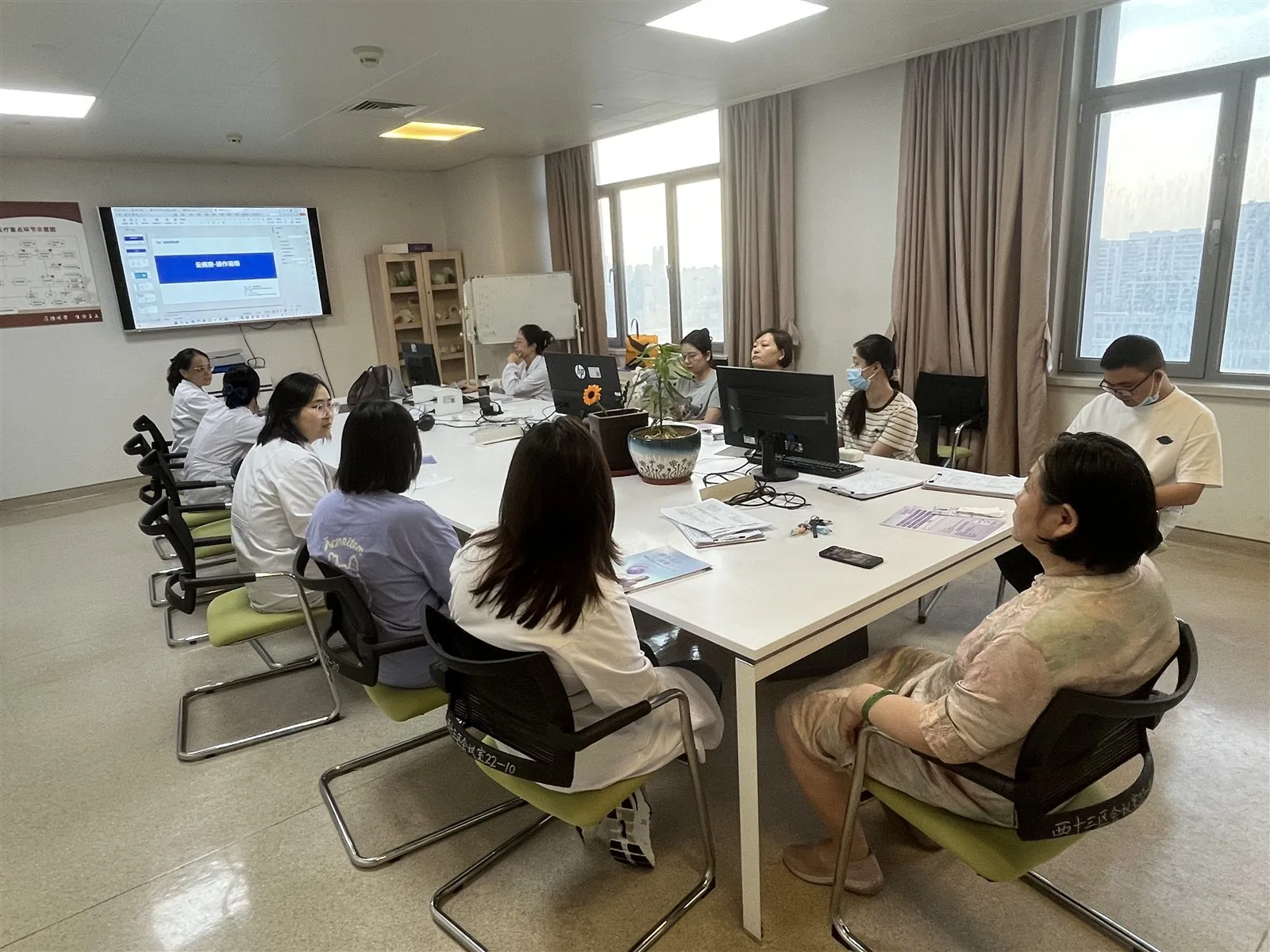
The WiGroup team and hospital business personnel discussed the construction plan on site
Go deep into the real business sceneInterview · Shadowing · Co-design

When AI enters business processes, collaboration and continuous operation are difficult

Systems, equipment and algorithms are only the basis of the project. Long-term operation also depends on whether organizations can collaborate, whether systems can be connected, and whether front-line personnel can use it stably in daily work.

Health Commission

Cross-agency collaboration is difficult to sustain

Hospitals, systems, equipment and business standards within the region are not uniform. Even if the project completes platform construction, it may form new information islands, making it difficult to support continued supervision, business collaboration, and capability sinking.

desired resultForm a regional coordination mechanism to support continuous supervision
Community chronic disease Screening Center

Screening data does not form a closed loop

There is no continuity between resident registration, equipment collection, quality control, risk identification, graded referral and follow-up, and primary care personnel need repeated entry and manual coordination.

desired resultAllow one screening to lead to follow-up and continuous management
Hospital Health Management Center

Lack of ongoing management after risk discovery

After high-risk groups are identified, risk assessment, health intervention, specialist referral and out-of-hospital follow-up do not form a stable closed loop, and health management tends to stay at the stage of one-time examination and report delivery.

desired resultIntegrate report results into continuous services inside and outside the hospital
The WiGroup FDE team first sorts out a running business process.

The team works with the client to identify process breakpoints and then selects appropriate software, equipment, models and implementation methods. Plans will be tested in pilots and adjusted based on feedback from the field.

We focus on three types of chronic disease management scenarios

Focusing on regional chronic disease screening, health management and medical prevention collaboration, WiGroup puts business consulting, product design, engineering development and on-site delivery into the same project.

Regional collaboration

Health Commission Regional capability synergy

Sort out the institutions, equipment, systems and chronic disease management processes in the region, and form a cross-agency collaboration mechanism and phased construction path.

main work

  • Diagnostic area chronic disease management status
  • Sort out the business relationships between cities, counties, townships and villages
  • Design screening, risk identification, referral and management processes
  • Unify key data calibers and system interfaces
  • Design regional monitoring and capability sinking mechanism
  • Select appropriate regions or institutions to carry out pilot projects

Typical deliverables

  • Regional status diagnostic report
  • Target Business Process Blueprint
  • List of data standards and interfaces
  • Regional coordination mechanism design
  • Phased construction roadmap
  • Pilot area implementation plan
primary care screening and prevention

Community chronic disease Screening Center

Focusing on registration, examination collection, data quality control, risk identification, hierarchical referral and follow-up management, the combined deployment of software, hardware and models is completed.

main work

  • Design the personnel and business flow at the screening site
  • Access to identification, inspection and collection equipment
  • Reduce duplicate registration, manual entry and paper circulation
  • Establish a quality control mechanism for collected data
  • Configure risk stratification, alerts, and referral rules
  • Establish post-screening follow-up and ongoing management processes

Typical deliverables

  • chronic disease Screening and Prevention Center Construction Plan
  • On-site workflow design
  • Software, hardware and model combination solutions
  • Equipment and system access solutions
  • Risk stratification and early warning rules
  • Pilot system, training SOP and follow-up closed-loop plan
Ongoing management

Hospital Health Management Center

Connect physical examination screening, risk assessment, health intervention, specialist referral and out-of-hospital follow-up, allowing physical examination results to enter follow-up management.

main work

  • Sort out the existing procedures of the physical examination and health management center
  • Identify points of examination, assessment, intervention, and referral
  • Connect with existing business systems in the hospital
  • Deploy disease risk assessment or population stratification capabilities
  • Establish a collaboration mechanism between health management centers and clinical specialties
  • Designing out-of-hospital follow-up pathways for high-risk groups

Typical deliverables

  • Health management business process reconstruction plan
  • Existing system integration solution
  • Risk model deployment plan
  • Health intervention and specialist collaboration mechanism
  • Out-of-hospital follow-up management plan
  • Operation indicators and effect evaluation system

Service boundaries:WiGroup The current FDE service focus area chronic disease Screening, health management and medical prevention collaboration scenarios do not cover pan-hospital processes such as medical record quality control, patient services, hospital operations, and medical insurance review.

FDE works with customers to turn on-site problems into operational solutions

FDE (Forward Deployed Engineering) is an engineering service method that goes deep into the customer's business site.

Services include on-site research, solution design, system access, pilot and production deployment. Business, product and technical personnel work together with the front-line team to advance, and on-site feedback will directly enter the next round of adjustments.

Understand the processdesign planCollaborative developmentAccess systemPilot verificationContinuous optimization
On-site co-creation

Through interviews, follow-ups and on-site observations, understand the real processes beyond institutional documents.

Project realization

Convert consulting conclusions into runnable software, devices, models and interfaces.

Result verification

First conduct a small-scale pilot in a real scenario and verify the effect through data and usage feedback.

Continuous optimization

After going online, continue to track operational issues and gradually improve processes, rules and product capabilities.

Six stages to advance the plan into continuous operation

On-site research, joint design, pilot verification and formal deployment all have clear work boundaries and stage outputs.

01On site

On-site investigation and business diagnosis

Through interviews with managers, interviews with front-line personnel, process follow-ups, and inventory of systems, equipment, and data, we can understand how the current work actually operates.

stage output

  • Current business flow chart
  • Inventory of existing systems and equipment
  • List of issues and process breakpoints
  • Preliminary transformation opportunity analysis
02focus

Clarify scenarios and pilot goals

Based on business value, implementation difficulty, data conditions and organizational readiness, select priority transformation scenarios and clarify the pilot scope, goals and responsibility boundaries.

stage output

  • Scenario priority suggestions
  • Pilot scope
  • target indicator
  • Project boundaries and collaboration mechanisms
03Design

Joint design solutions and architecture

Work with client business, information and management personnel to design target processes and define system, device, model, data, security and interface solutions.

stage output

  • Target Business Process Blueprint
  • Products and functional solutions
  • System and data architecture
  • Interface List, Implementation Plan and Risk List
04realize

Rapid prototyping and collaborative development

Build runnable prototypes or minimum usable systems around priority processes, connect software, intelligent hardware, models and existing systems, and allow frontline users to participate in verification as early as possible.

stage output

  • Runnable prototype or minimum usable system
  • Critical system and device interfaces
  • Initial rule or model configuration
  • User testing and feedback recording
05Verify

Small-scale pilot and verification

Conduct pilots in real organizations, real people, and real processes to verify whether the process is executable, whether the data is reliable, whether the personnel can use it, and make timely adjustments.

stage output

  • Pilot operation report
  • Questions and Optimization Checklist
  • Indicator verification results
  • Acceptance conditions and exception fallback plan
06run

Production deployment and continuous optimization

Complete formal environment deployment, personnel training and operation mechanism construction, and continue to iterate based on operational data, business feedback and policy changes.

stage output

  • Official operating system
  • Training materials and job SOPs
  • Operation monitoring mechanism and iteration plan
  • Regional replication or scale promotion plan

FDE capabilities come from long-term medical project practice

WiGroup has long served hospitals, Health Commission and primary healthcare institutions, and continues to accumulate medical software, intelligent hardware, models and scientific research, as well as project implementation capabilities around chronic disease screening and prevention and integration of healthcare and prevention.

Understand business

Understand the actual process of chronic disease screening, risk identification, hierarchical referral, health management and regional coordination.

Can be integrated

Connect medical software, smart hardware, models and existing systems to deliver them in combination with on-site processes.

Can land

Covering demand research, solution design, development implementation, on-site training, online support and continuous iteration.

Understand the difference

Understand the different construction conditions and implementation paths in mature areas, remote mountainous areas and border multi-ethnic areas.

To implement medical AI, first clarify boundaries and responsibilities

Deployment methods, data scope, security responsibilities and model usage boundaries need to be jointly confirmed in the formal project plan and agreement.

Data control

Customers always retain management and control of their business data and can evaluate on-premises, private cloud or hybrid deployment options based on project conditions.

Least Privilege and Process Auditing

Set access permissions according to position and business needs, and keep necessary records of key operations, data calls and version changes.

Phased verification

New rules, models and processes are first piloted within a limited scope, and then enter formal operation or expand the scope of application after passing business and technical verification.

Personnel supervision and exception rollback

Clarify manual review, exception handling, version management and rollback mechanisms to prevent uncontrolled new capabilities from directly interfering with important businesses.

Let’s first explain a specific scenario

Have a zone chronic disease scene and don't know where to start?

Call the WiGroup 400 service hotline. The staff will first understand your organization type, existing system and construction goals, and then determine the first step with you: process diagnosis, pilot verification or overall construction.

+86 400-777-5100

Prepare before calling

  1. Institution typeHealth Commission, community chronic disease screening center or hospital health management center
  2. existing baseMain systems, equipment and business models already in use
  3. Construction goalsThe business problem we most want to solve at the moment
Telephone consultation+86 400-777-5100