
public health follow-up and refined model synergy of chronic disease
Use a unified path to connect public health follow-up, chronic disease management and in-hospital specialist collaboration.
Use a unified path to connect public health follow-up, chronic disease management and in-hospital specialist collaboration.
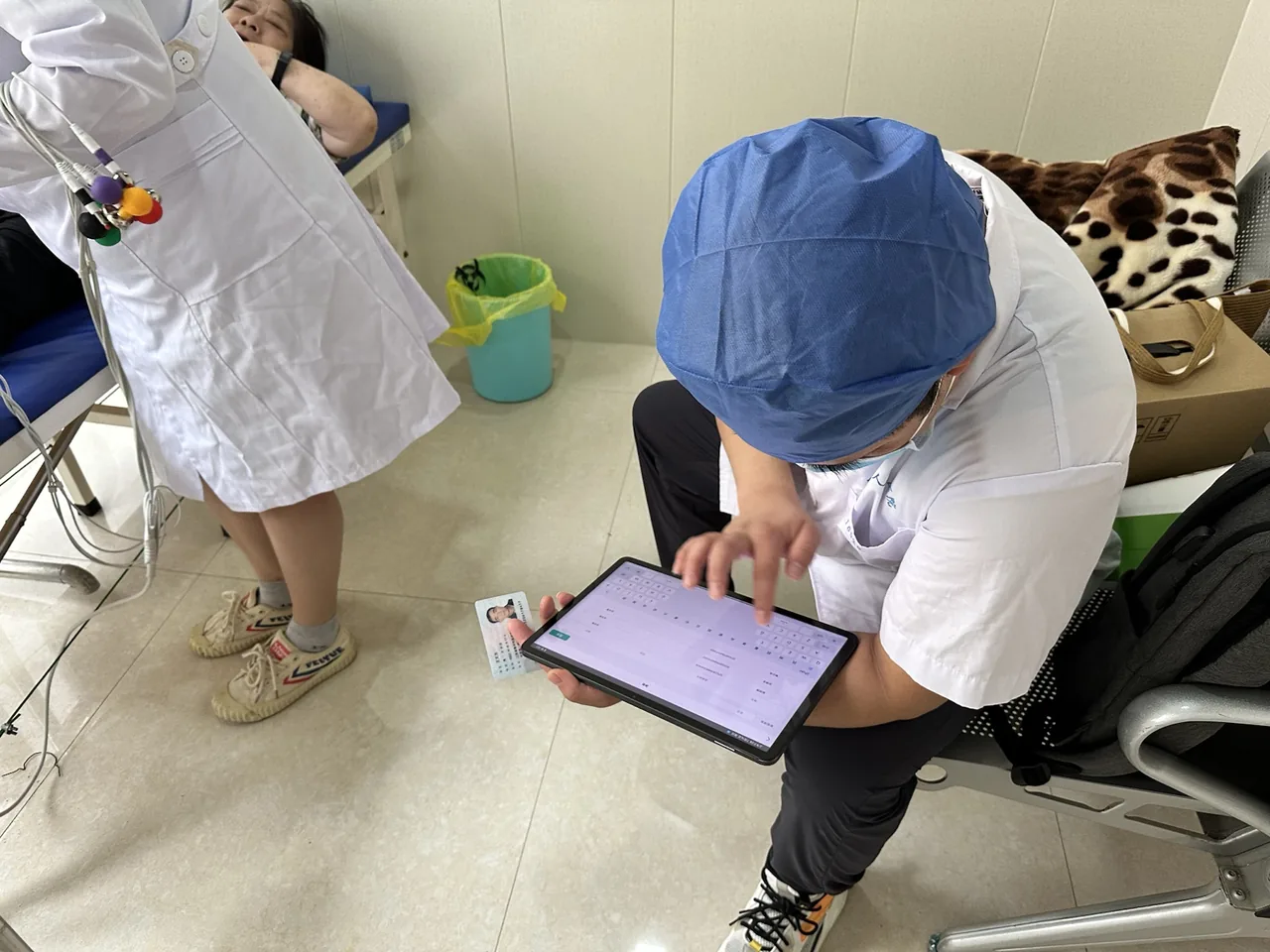
From on-device collection, device access, code scanning verification to platform quality control, manual filling deviation is reduced.
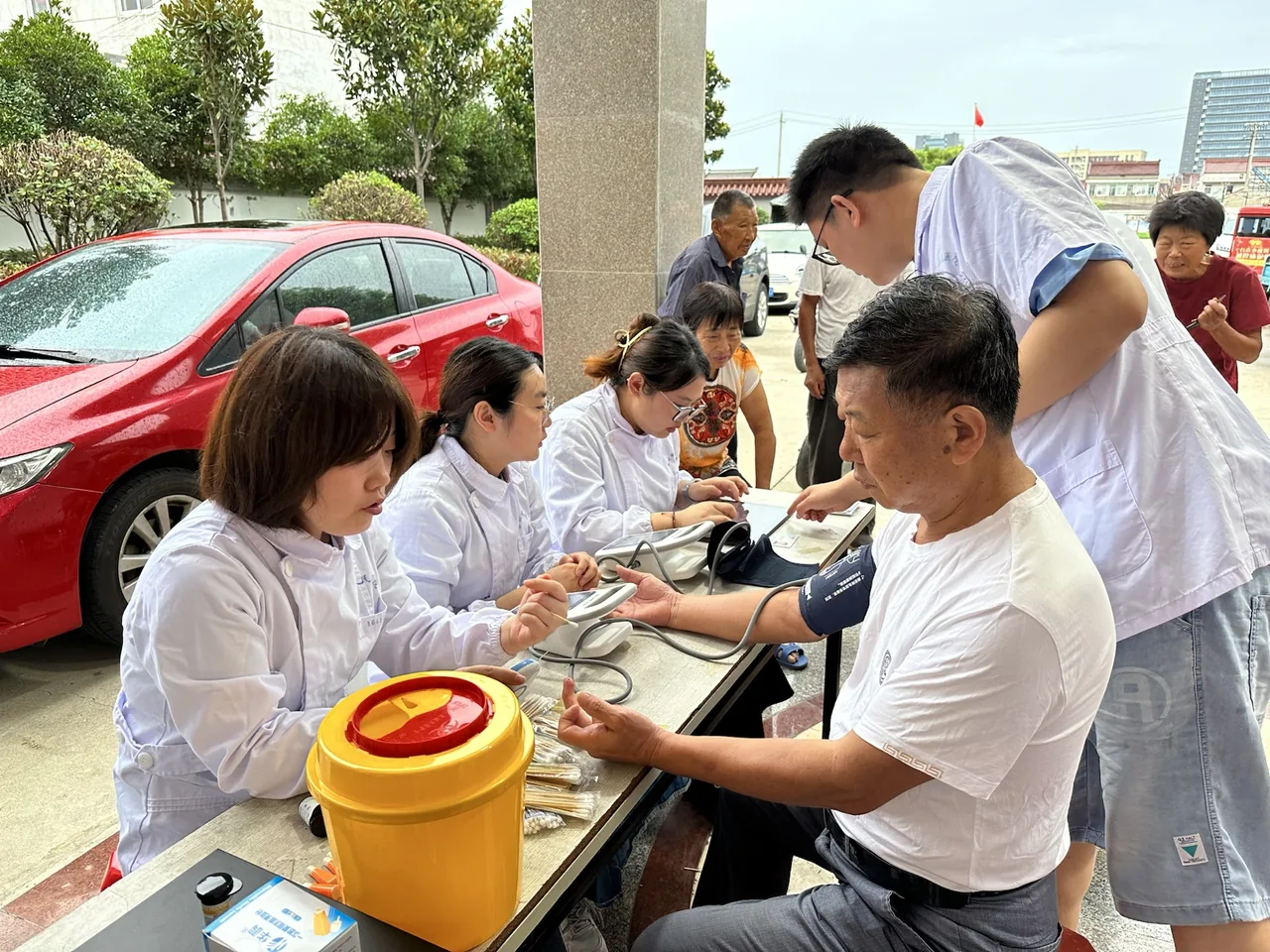
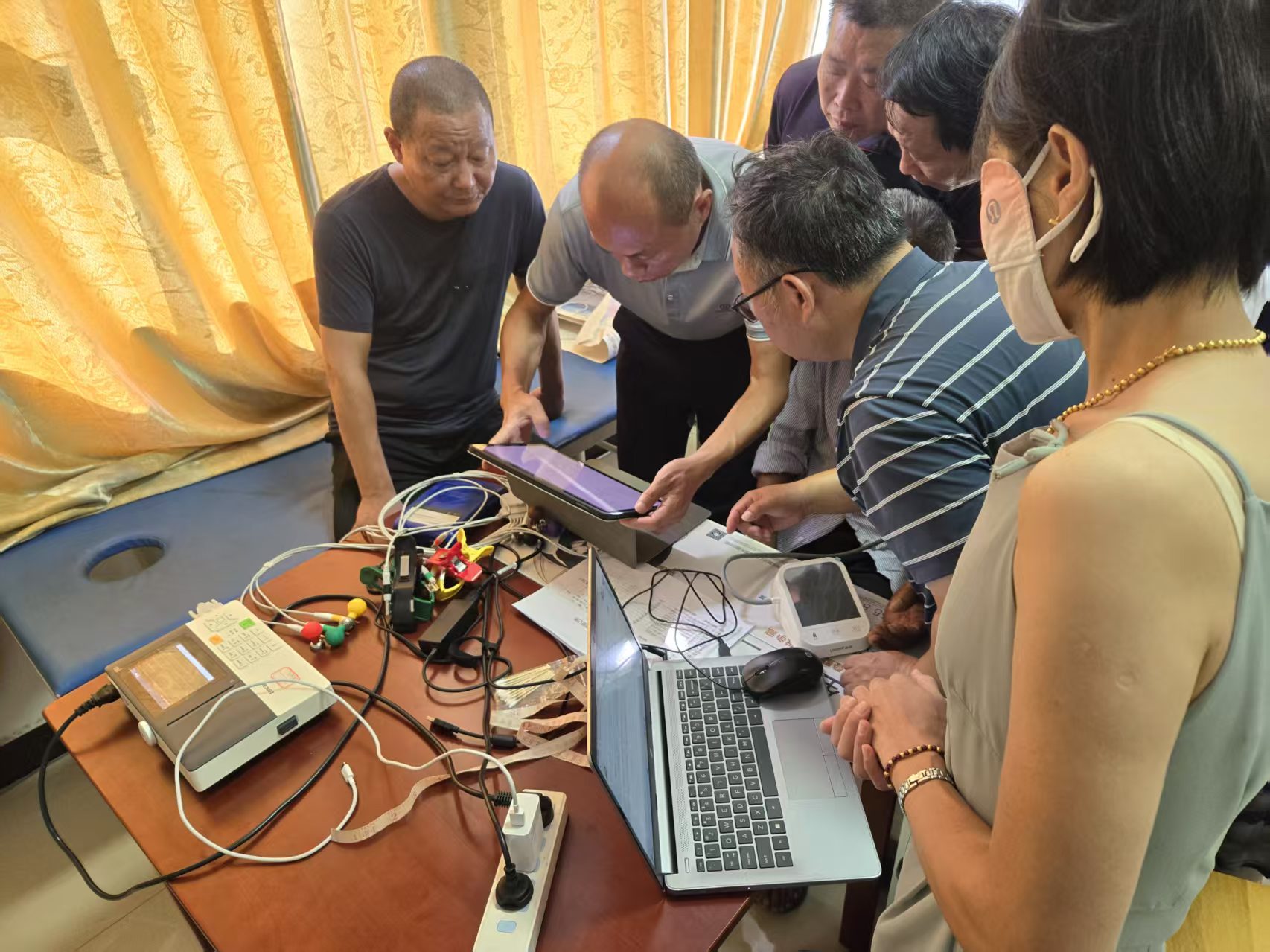
Support on-site physical examinations of multiple devices, multiple positions, and multiple groups of people, forming automatic collection and automatic aggregation.
Embed risk reminders, auxiliary screening and superior collaboration into the primary care service process.
Incorporate abnormal identification, review reminders and continuous intervention into the same management closed loop.
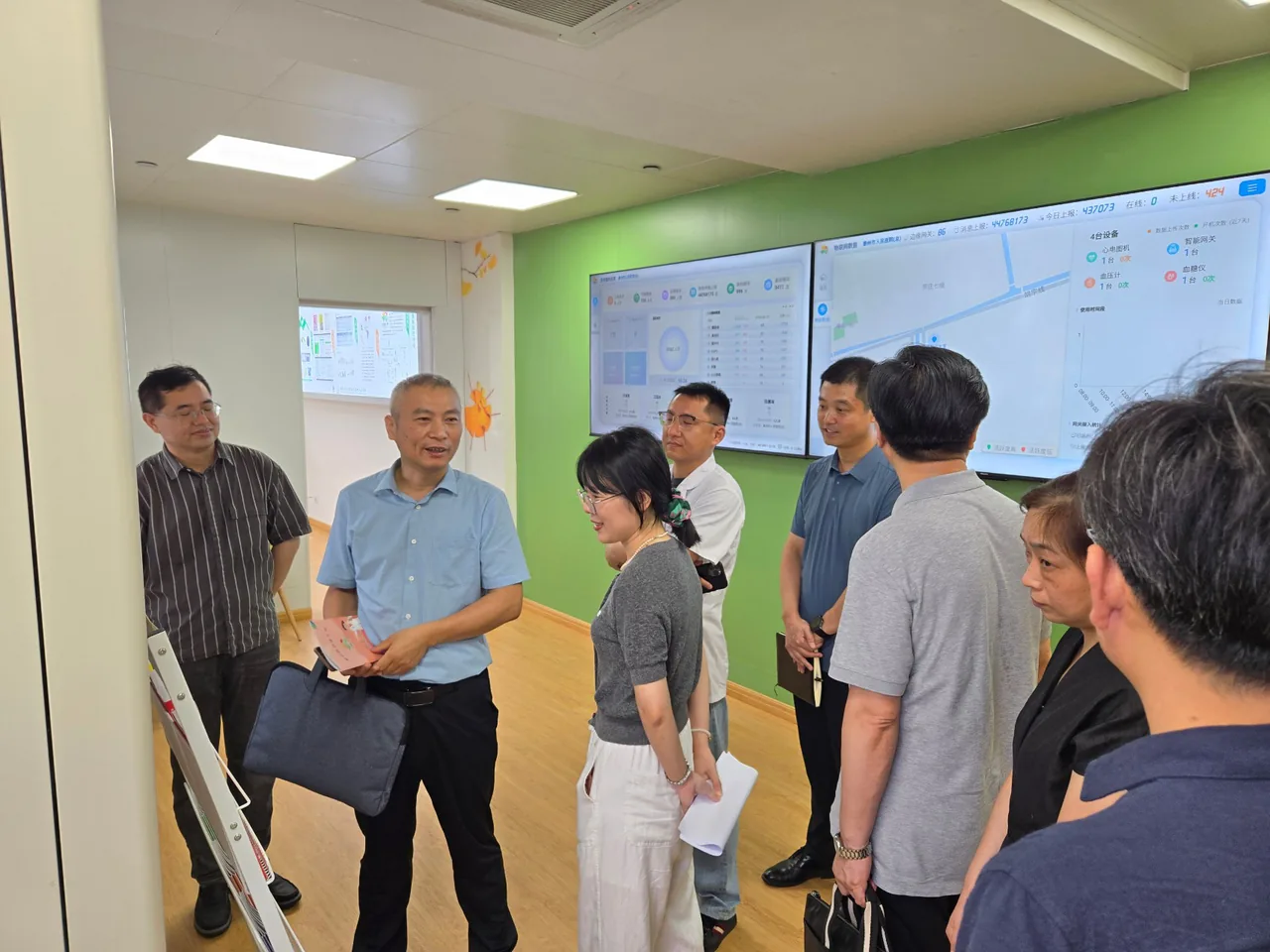
Support multi-level roles in cities, counties, townships, and villages to share information, coordinate processing, and supervise tracking.
Using the regional platform as a hub, it connects Health Commission supervision, lead hospital collaboration, primary healthcare institutions execution and resident health data collection to form a closed-loop management capability from screening, quality control, early warning, referral to follow-up intervention.

WiGroup combines years of industry experience and rigorous health economics evaluation to understand the core pain points of primary healthcare institutions. Adhere to full-stack self-research and in-depth industry adaptation of software and hardware to overcome the problems of data collection and traceability of scattered equipment in the hospital. With the help of independent and controllable advanced AI capabilities, the platform deeply empowers a full-link digital closed loop from "data collection, sensorless uploading, real-time anti-counterfeiting quality control to intelligent analysis of the entire disease process", truly using technology to make high-quality primary care medical services within reach.
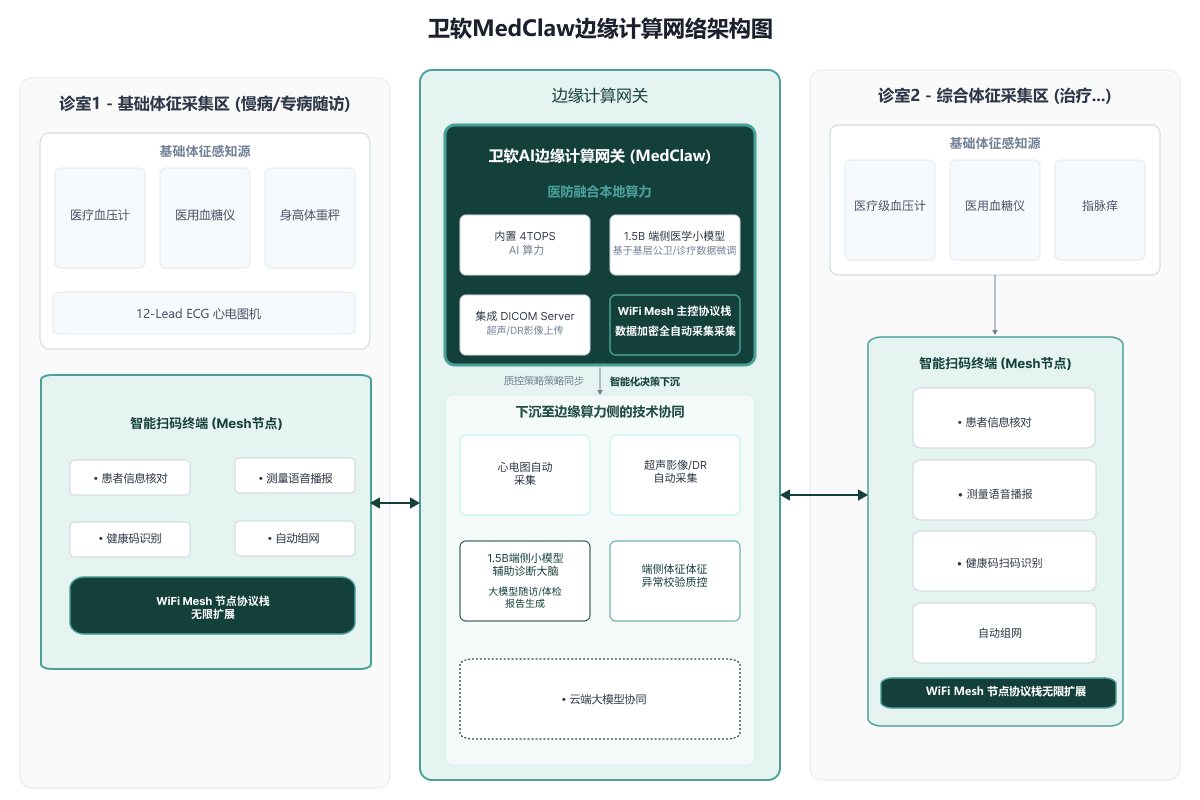
Through intelligent collection, edge quality control, platform aggregation, risk warning and collaborative processing, primary care helps primary care transform screening results into manageable and traceable business actions.
Primary Care Chronic Disease Screening and Prevention Center is suitable for areas that already have a basic public health system, regional medical platform or integrated county healthcare network collaborative foundation. The positioning of WiGroup is not to simply add a software entrance, but to organize equipment collection, resident documentation, complication screening, risk assessment, hierarchical intervention and superior collaboration into a set of operational centralized capabilities around the real service scenario of primary care.

Jiangsu Province has continuously incorporated the construction of Primary Care Chronic Disease Screening and Prevention Center into the provincial government’s livelihood projects, and promoted primary care to form a unified, standardized, simple and easy-to-implement integrated chronic disease screening and prevention management strategy focusing on infrastructure, equipment purchase, personnel training, construction standards and participation of social forces.
The construction focuses on the "three highs" of high blood pressure, diabetes, and hyperlipidemia, and gradually includes high-risk groups and patients such as COPD, osteoporosis, atrial fibrillation, and tumors through the "3+N" model, and promotes secondary and above hospitals to participate in chronic disease services through visits, training, teaching, expert studios, and joint wards.
public health physical examination, outpatient discovery, disease-specific care follow-up and in-hospital referral operate independently, making it difficult to form a continuous identification portal.
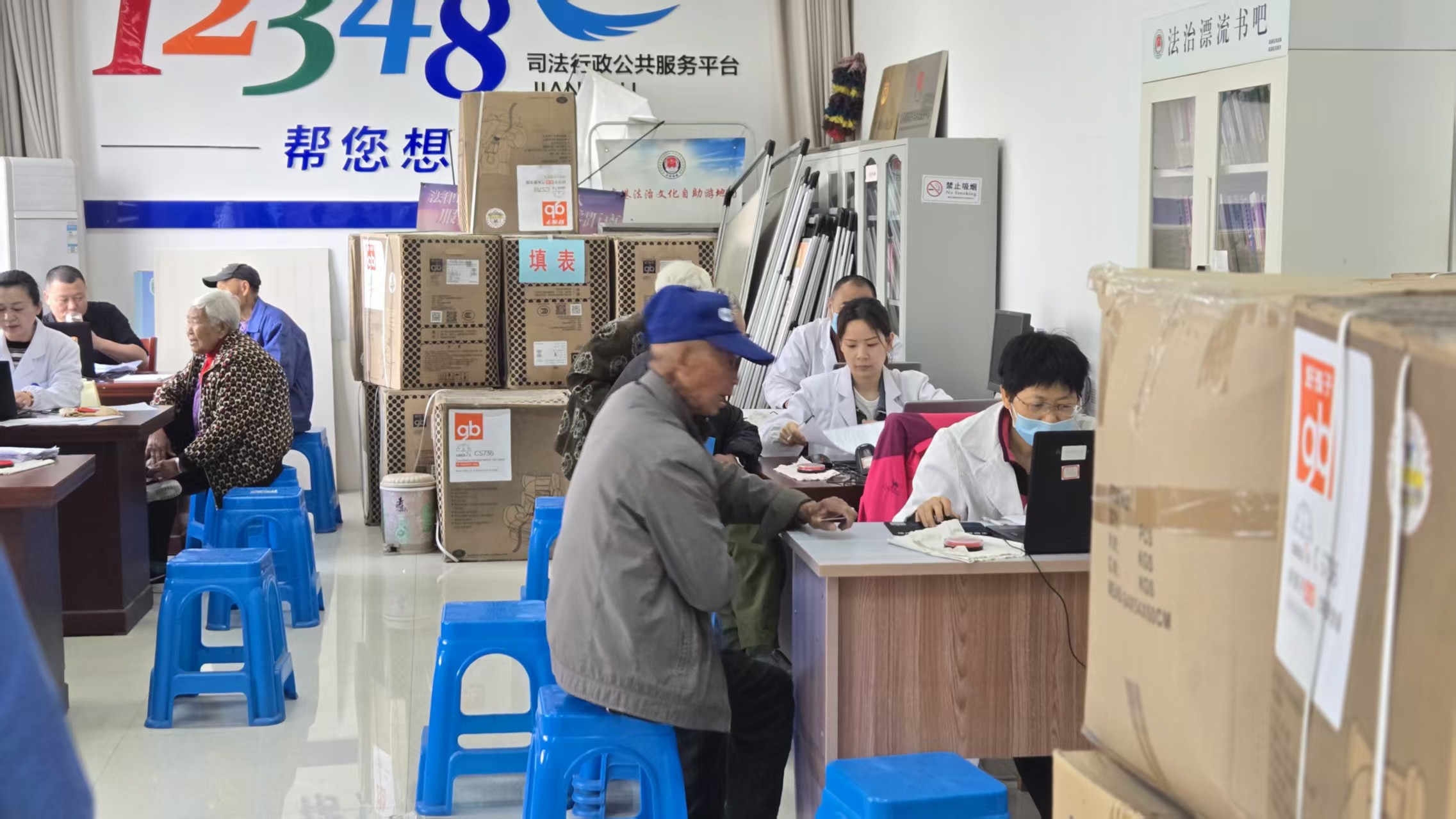
On-site collection of multiple devices and positions relies on manual registration, and data authenticity, integrity and efficiency are easily affected.
Screening for fundus, foot, kidney, blood vessel and other complications is not embedded in the primary care process, making it difficult for risk groups to intervene early.
There is a lack of traceable data links and unified processing closed loops between higher-level hospitals, primary healthcare institutions and regional supervision.
With Primary Care Chronic Disease Screening and Prevention Center as the hub, the chronic disease early identification portal is first established through wide-coverage screening, and then high-risk groups are identified through complication screening, and finally enters the primary, secondary, and tertiary prevention management paths, forming a post-screening closed loop.
Taking archiving, admissions, screening, assessment, management and compliance as the main lines, it connects resident entrance, health records, consultation information, high-risk screening, disease diagnosis, complication screening, risk assessment, standardized management and target inspection.

Pictures of hardware to be supplemented: subsequent supplementary screening equipment, mobile follow-up package, edge gateway and on-site deployment photos.
Specific equipment can be configured in stages according to regional construction goals. The core principle is to allow on-site inspection data to be automatically collected, uploaded, and quality controlled as much as possible to reduce primary care repeated entry and subsequent supplementary entry.
The introduction page does not expand the project acceptance details, but it is necessary to let customers see the direction of the construction goals: after the center is completed, it should be able to support population screening, risk discovery, complication screening, classified registration, standardized management, follow-up intervention and superior coordination.
Taking the public construction results of Jiangsu Province as a reference, in 2024, relying on the 60 Primary Care Chronic Disease Screening and Prevention Centers that have been built, a total of 830,000 residents were screened, and 320,000 people at high risk of chronic diseases were found, 36,521 newly diagnosed patients with hypertension, and 27,270 patients with diabetes.
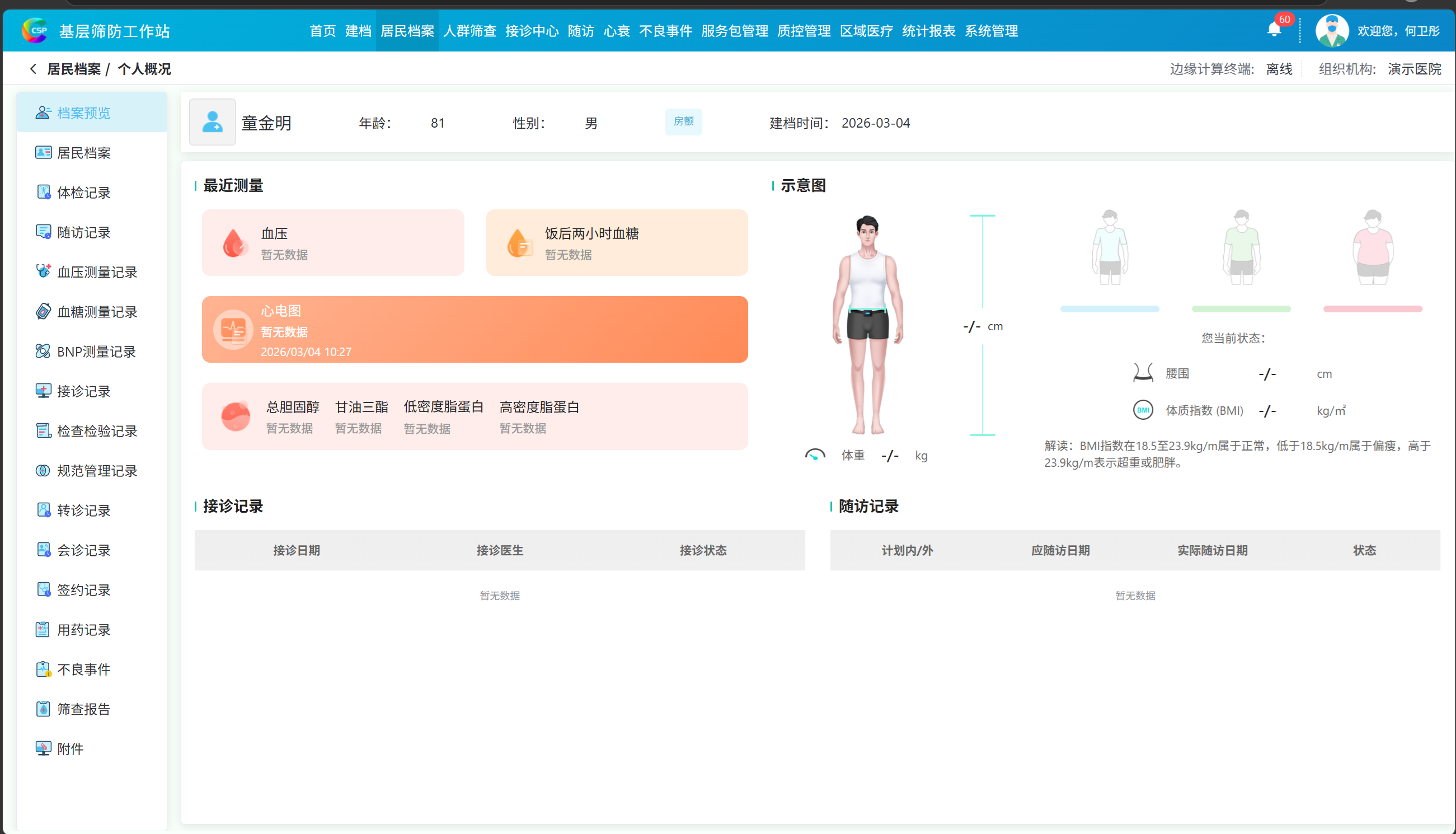
Centering on resident identity, basic information, physical examination records, chronic disease tags and historical service records, a unified data portal for primary care screening and prevention work is formed to provide a basis for subsequent risk assessment and follow-up management.
The platform is oriented to hospital health management center, outpatient, inpatient, specialist and out-of-hospital follow-up scenarios. It integrates physical examination, out-patient, in-patient, examination and patient self-assessment data into continuous health files to support risk identification, hierarchical management, specialist collaboration, out-of-hospital follow-up and effect evaluation.
Risk assessment, health record establishment, patient tag initialization.
Diagnosis and treatment records, nursing pathways, process monitoring and education.
Discharge summary, medication reminders, follow-up plans and health education.
Follow-up management, follow-up reminders, risk reminders and long-term intervention.
The practical difficulty is not only the lack of system tools, but also that service value, hospital-level authorization, specialty collaboration and data processes are not organized into the same set of executable paths.
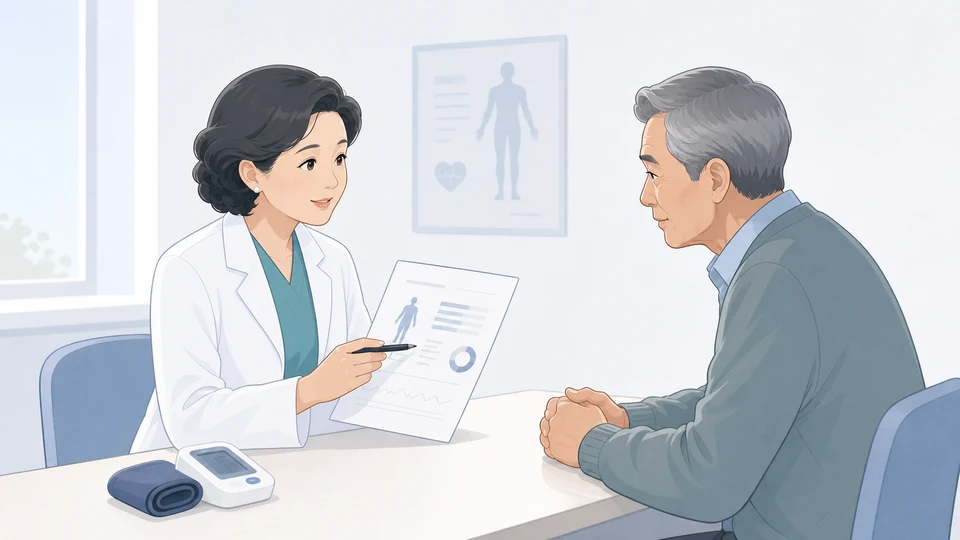
It is difficult to rely solely on medical insurance payment for prevention and long-term health management. The willingness of patients and commercial insurance to pay needs to be gradually established by clarifying the value of services.
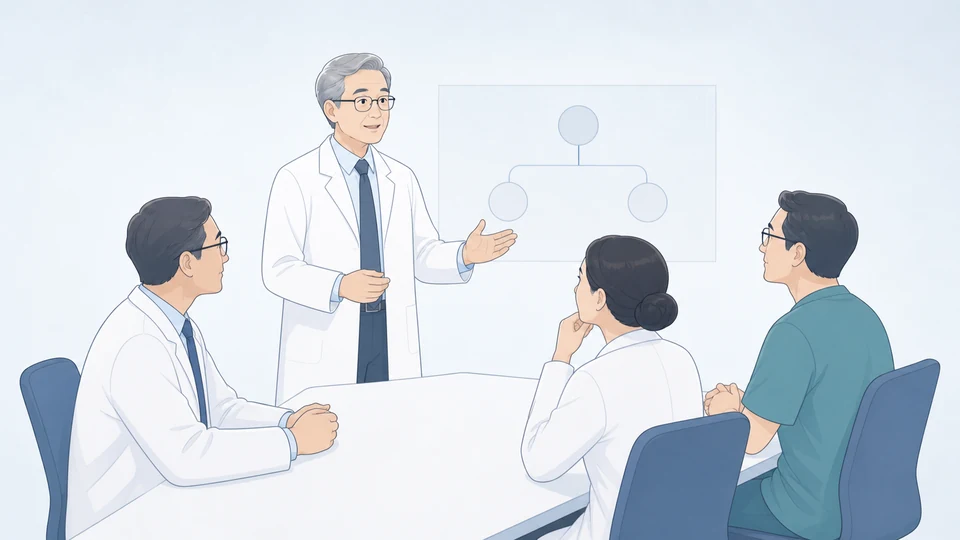
If the health management center is just a physical examination department, it will be difficult to coordinate outpatient clinic numbers, specialists, nursing follow-up, examination reviews, and operational resources.
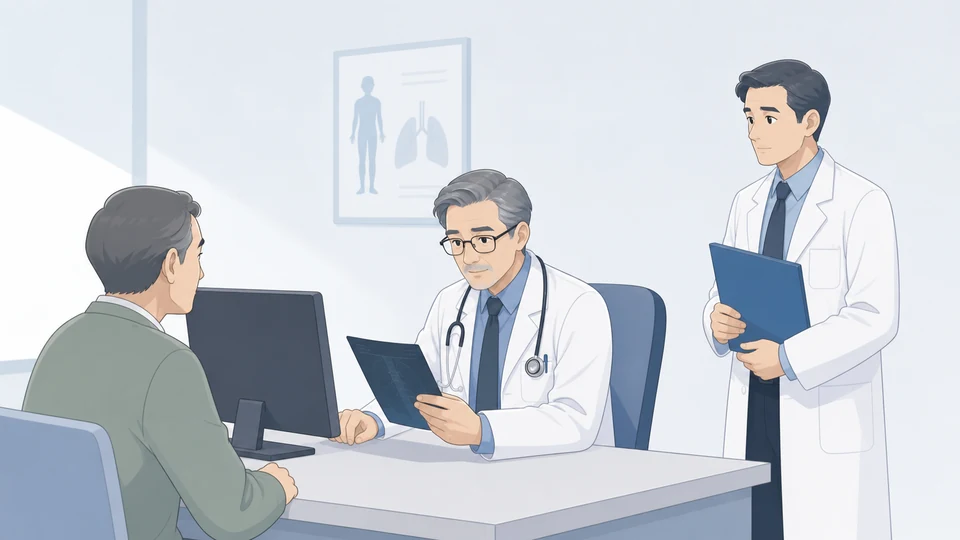
Abnormal physical examination, chronic disease risks and postoperative recovery tend to remain at the level of recommendations, lacking referral, review, return of opinions and continuous management paths.
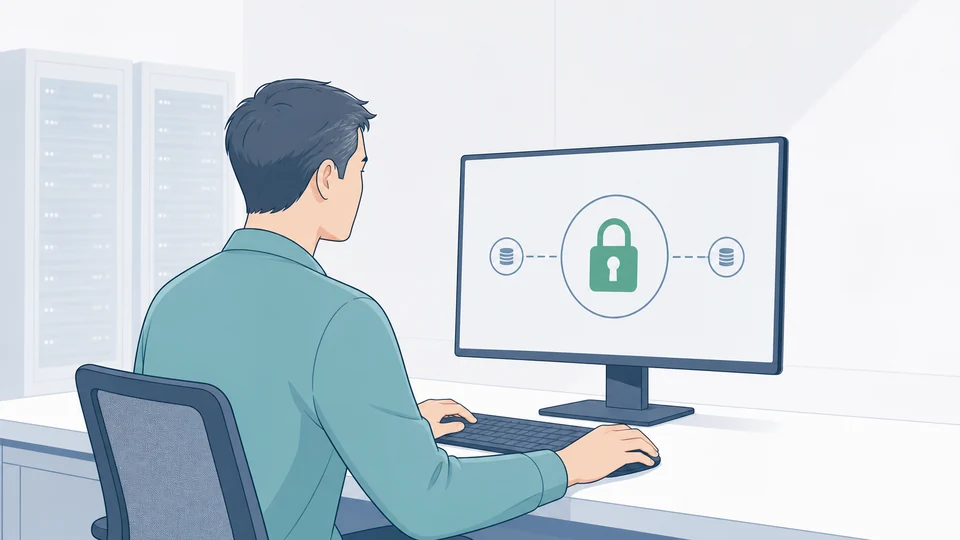
Physical examination, outpatient, hospitalization, examination and examination, follow-up and patient self-evaluation data are scattered, making it difficult to support risk stratification, task allocation and effect evaluation.
Health management is not a single department project, but a hospital-level collaborative project. The platform uses the health management center as the operational entrance to connect medical standards, specialist capabilities, nursing follow-up, information systems and performance mechanisms.

The platform does not replace the hospital's organizational capabilities, but instead precipitates cross-department collaboration into rules, paths and tasks, allowing the health management center to continue operating, tracking and reviewing.
Identify abnormal groups such as blood sugar, glycosylated hemoglobin, BMI, and blood lipids from physical examination, outpatient, hospitalization, and test results, automatically complete risk stratification, and generate nutrition, exercise, review, medication reminder, and specialist referral tasks.
Integrate physical blood pressure examination, outpatient diagnosis, home blood pressure monitoring and combined risk factors, establish a stratified follow-up path, and link specialist resources such as cardiology, nephrology, and neurology.
Undertake low-dose CT results, combine nodule size, density, number, boundary, previous imaging and personal risk factors, link the imaging department, respiratory department, thoracic surgery and MDT to avoid leakage and excessive intervention.
The following is a page-level product capability preview, which can be replaced with real system screenshots later.
Unify physical examination, outpatient, hospitalization, examination and out-of-hospital follow-up data from the patient's perspective to form a health file that can be used for risk identification and long-term management.