
clinical mathematical modelScoring rules · Threshold calibration · Exclusive prognosis
Models and algorithms for clinical prediction scenarios - strong customization
disease-specific model focuses on a single disease or a single type of clinical scenario, and builds a specialized algorithm model system around one or more specific issues in the entire process of screening, diagnosis, classification, prognosis, treatment, and follow-up.
Technical paths are not limited to fine-tuning of large models
The traditional clinical mathematical model is the earlier and more mature mainstream form of disease-specific model; the reuse boundaries of the two types of routes are different, but they require customization in terms of system implementation, local adaptation and process embedding.

mathematical model
The general scoring rules are highly standardized, but system implementation and localization threshold adjustment require customization; the exclusive prognostic model developed by the institution is fully customized.
- Reusable
- Mature scoring rules and modeling methods
- Need to be customized
- System access, local thresholds and exclusive factors

large model
The base capabilities are reusable, but disease-specific care knowledge injection, scene task fine-tuning, and process docking all need to be customized; the purely general medical model is not disease-specific model in the strict sense, and the depth of expertise is not enough to support clinical decision-making.
- Reusable
- Base Competencies and Universal Language Understanding
- Need to be customized
- disease-specific care Knowledge, task ability and diagnosis and treatment process
disease-specific model There is no completely universal product
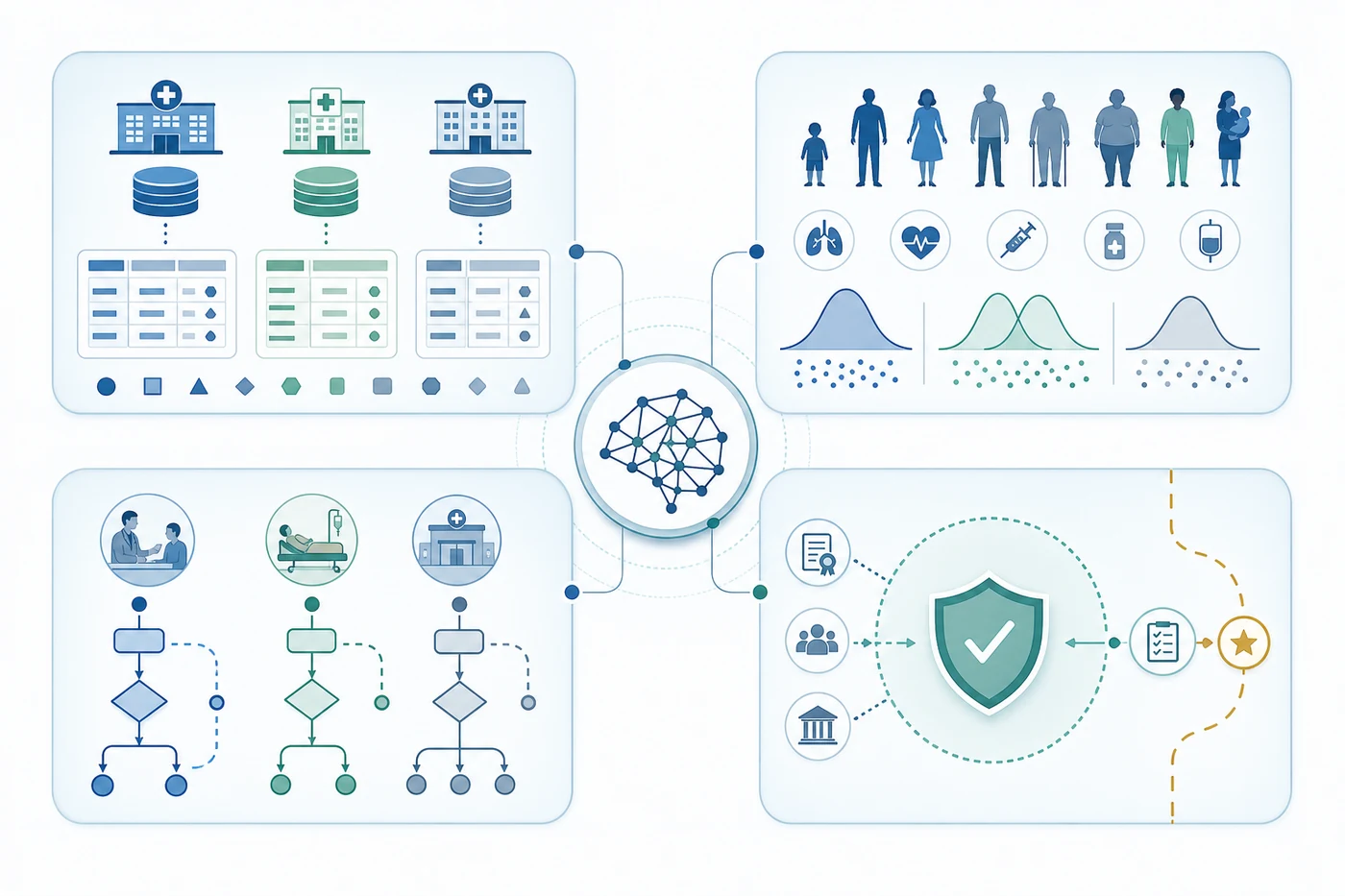
The high heterogeneity of medical scenarios determines that disease-specific model naturally cannot achieve "one product fits all hospitals", but it can be customized based on mature methods and existing capabilities.
Heterogeneous data standards
The HIS, EMR, and PACS data structures, field definitions, coding standards, test item names, and reference value ranges of different hospitals vary greatly, and general models cannot be directly adapted.
Differences in population and diagnosis and treatment
The baseline characteristics, complication spectrum, and treatment habits of patients in different regions and hospitals of different levels vary significantly, and the single-center model is prone to "insufficient external validity" when used across hospitals.
business process differences
The process nodes of tertiary hospitals and community hospitals, outpatient and inpatient, and physical examination scenarios are different. The trigger timing, output content, and interaction method of the model need to match the corresponding processes.
regulatory compliance constraints
Medical AI products that have obtained Class III medical device certificates have clear applicable scenarios, applicable equipment and applicable population ranges, and new institutions must complete localization verification for use.
From data entering the hospital to integrating capabilities into clinical practice
Customization is not just about training a model, but about organizing data, models, processes and scenarios into a set of system capabilities that can be continuously used by doctors.
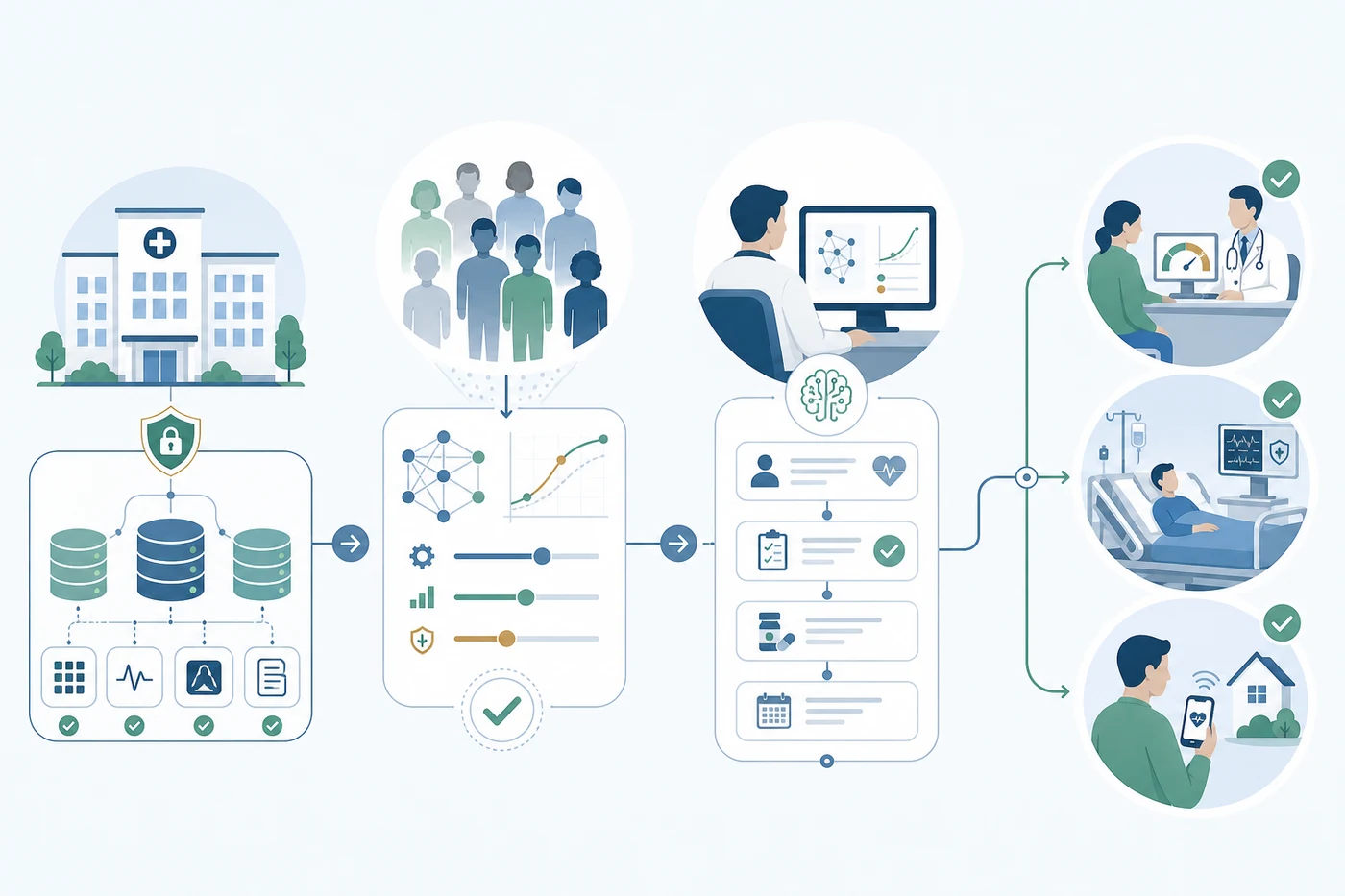
Data access and governance
Connecting with the hospital's existing systems, cleaning local data, and unifying field standards are necessary steps for all implementation projects.
Localized model adaptation
Use the hospital's local disease-specific care data for lightweight fine-tuning and calibration to improve the model's performance on the local population; in a small sample scenario, dozens to hundreds of data can be used to complete the adaptation.
business process embedding
Match the hospital diagnosis and treatment path, determine the trigger node, output location and interaction method of the model to ensure seamless integration into the doctor's workstation.
Scenario-based function customization
It is also diabetes disease-specific model. The outpatient service focuses on risk screening, the ward focuses on complication management, and the out-of-hospital focus on follow-up intervention.
WiGroup has accumulated rich experience in model development in the field of electrophysiology
WiGroup has extensive experience in model development in the field of electrophysiology, such as heart failure risk prediction models and coronary heart disease risk prediction models, and has accumulated multiple solutions from data preprocessing, feature construction and model factor selection. Users only need to provide training set, validation set and test set data to complete the construction of mainstream models and develop special models based on model capabilities.
Mainstream model
LightGBMXGBoostrandom forestlogistic regressiondecision tree
Evaluation indicators
AccuracySensitivitySpecificityROC-AUCPR-AUCF1 score
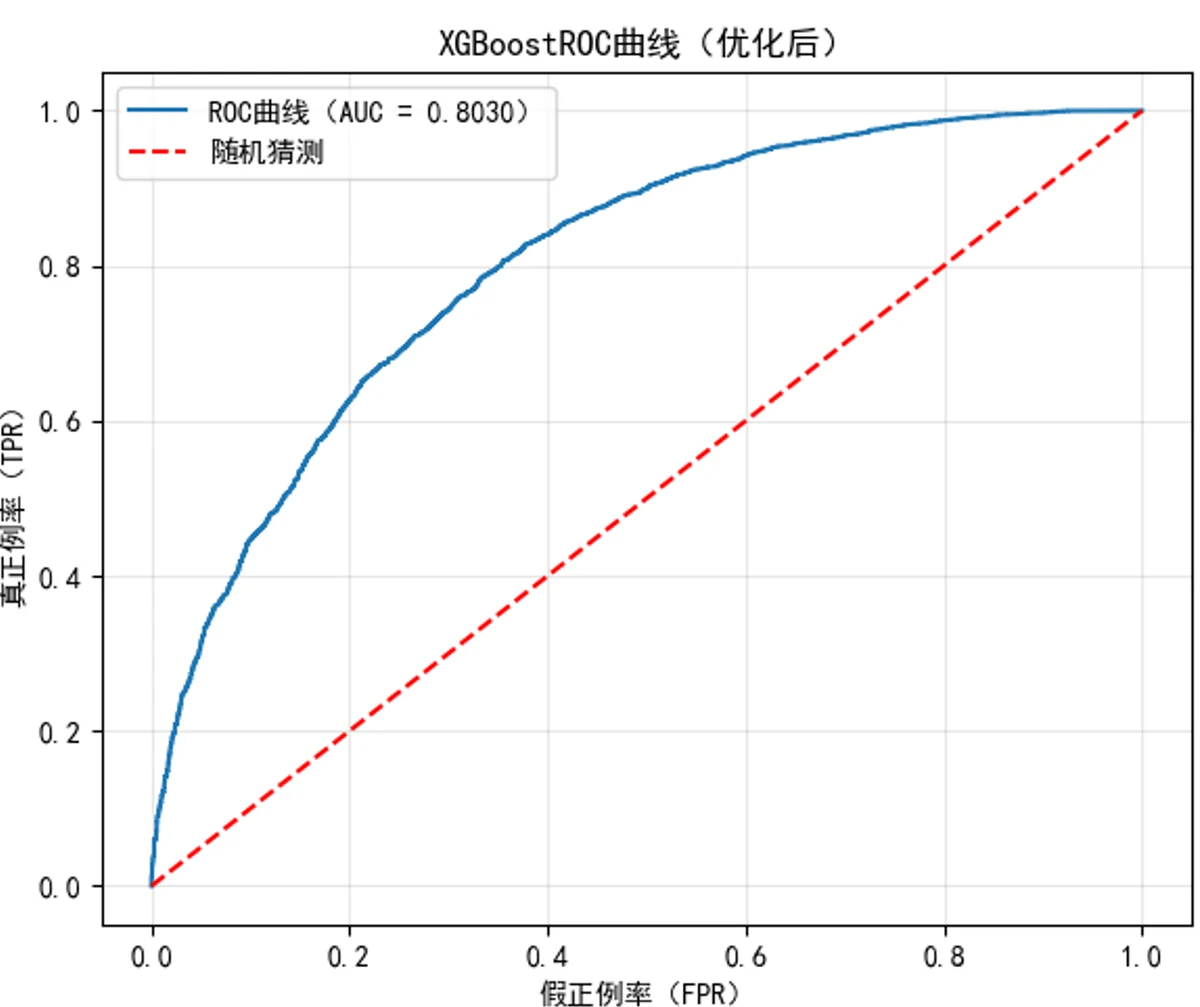
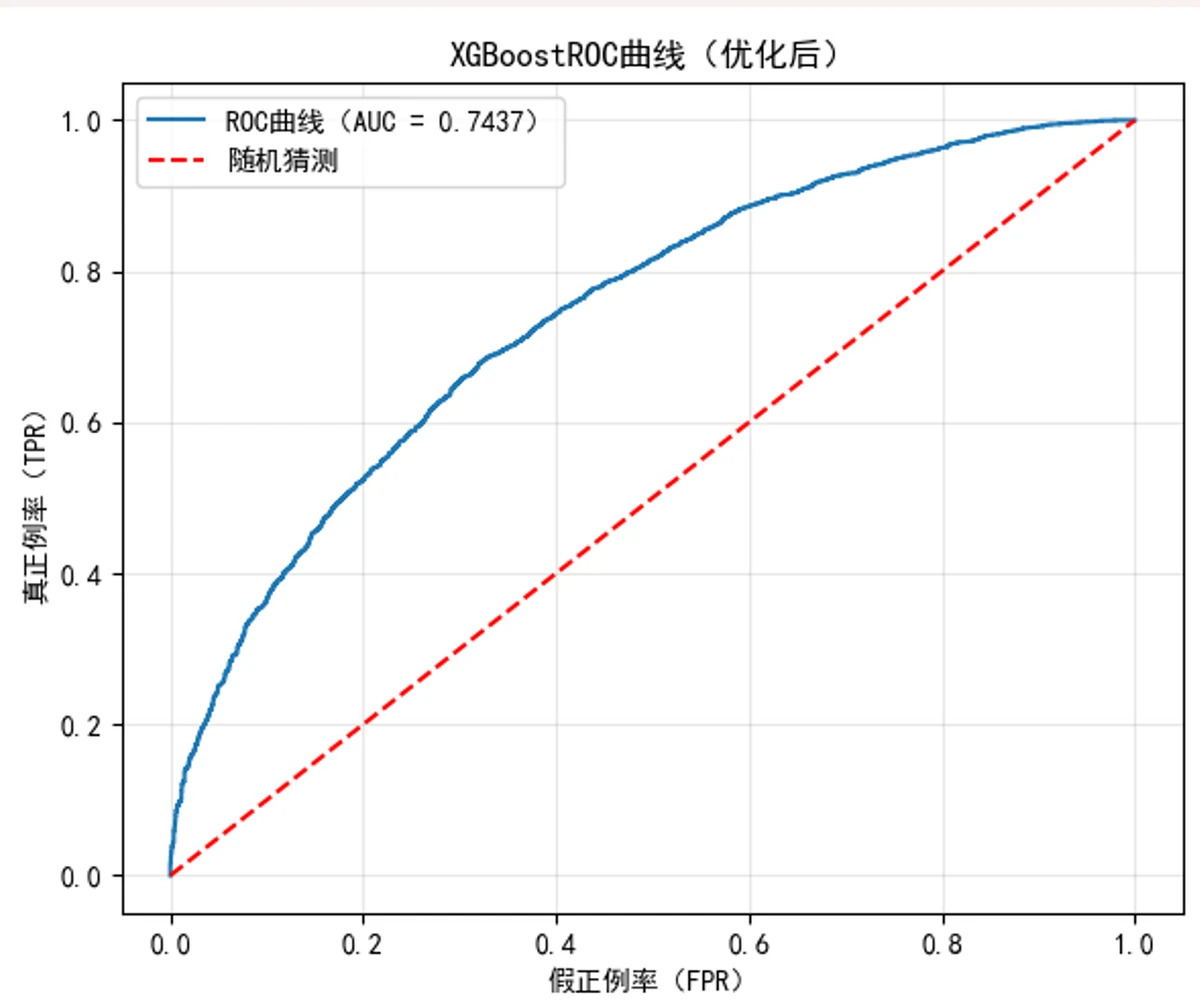
Example of model evaluation results
The ROC curve is used to demonstrate the model's distinguishing ability.
The cooperation network revolves around clinical issues, model research and engineering implementation.
Nanjing Medical University
Collaborate around medical intelligence algorithms and clinical research.
Fudan University
Collaborate around model research and data analysis capabilities.
Huazhong University of Science and Technology
Collaborate around engineering methodologies and system capabilities.
Tianjin University of Traditional Chinese Medicine
Collaborate in multidisciplinary scenarios around specialist research.